In association with Fojo Media Institute, Linnaeus University, Sweden

Scenarios

Image to illustrate conflict of interest - created using Imagen 3 by David Brewer of MHM

Scenario: Conflict of interests

In this scenario you are a political correspondent working for a national public service broadcaster. A lobbying company offers you a significant amount of money to train lobbyists in how to influence the media. What do you do?
Real ale in front of a pub fire. Image by Media Helping Media released via Creative Commons BY-NC-SA 4.0

Legal threats – scenario

In this scenario a local newspaper reporter faces legal threats for a factual planning application report that lacked the applicant's demanded "positive spin."
Image by Rodhullandemu released via Creative Commons BY-SA

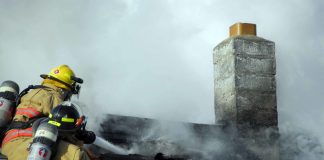
Covering a tragedy – scenario

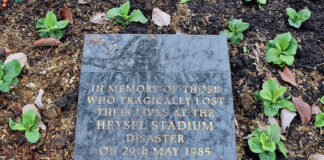
In this scenario we look at how a journalist should act when they witness a tragedy unfolding and have to decide whether to help, or to stand by and report.
Image by Henning Mühlinghaus released via Creative Commons CC BY-SA 2.0

Accuracy – scenario

In this scenario a reporter witnesses a mass walkout of workers from a factory affected by industrial action. The company claims it's business as usual; the union says all workers have downed tools.
Image by Media Helping Media released via Creative Commons BY-NC-SA 4.0

Off-the-record chat – scenario

In this scenario we look at what a journalist should do with off-the-record information when it relates to a major news event.
Image by Army Medicine released via Creative Commons CC BY 2.0

Editorial impartiality – scenario

In this scenario a reporter covering a story about medical malpractice in a hospital discovers that the consultant involved is a relative. What should they do?
Image by Stefán Pálsson released via Creative Commons CC BY-NC-SA 2.0

Photo journalism – scenario

In this scenario a reporter tells the newsdesk that she has a strong news story only to find that the facts were not as they seemed.
Image by Olga Oginskaya from Pixabay

Emotional assumptions – scenario

In this scenario a journalist lets their own emotional assumptions colour their news judgement resulting in misinformation.

You might also like

Lesson: False equivalence and false balance

This lesson plan is designed to help students avoid applying false equivalence and false balance to their news writing.

Reporting from conflict zones

When reporting from a conflict zone a journalist needs to be sensitive, understand history and cultural issues, and put people first

Module: Editorial ethics for journalists

This  module provides an outline for teaching journalism students the importance of  editorial ethics.