Every editorial decision is a test of accountability. Learn what that means when covering news, and then apply it to your own reporting.
In journalism, accountability has two dimensions. One is the role of holding the powerful to account, where the journalist asks probing questions and investigates issues that are in the public interest. The other is where journalists hold themselves accountable for the decisions they make, the newsgathering methods they use, and any mistakes made.
Put simply, journalists have to be accountable for everything they do, and be able to justify every decision made in terms of editorial ethics. It’s important to keep in mind that accountability is not just about correcting mistakes.
Below are four news events that required accountability. They include an illegal occupation of an oil platform, a football stadium disaster, a strike at a city factory, and a fire in a residential block.
They illustrate what journalistic accountability looks like in practice, and why it matters.
Being accountable for every editorial decision
The concept starts the moment you make an editorial choice. If you cannot explain why you made a decision, then you have a problem. You need to be accountable for what angle you took, which voices you prioritised, what information you left out, what details you included, and the tone and language you used when writing the piece.
Accountability is about thinking carefully and asking yourself questions at every stage of the production process:
- Who does this story involve, and who does it serve? Who should I include, and who should I leave out?
- What have I included, and what have I left out? What is needed to offer the audience the whole picture?
- When is the right time to speak to the people involved? Is this the right time to publish or broadcast the story?
- Where do I need to be honest with the audience – and my editor – about what I know, and what I do not know?
- Why did I make the editorial decisions I made? Can I defend them if challenged?
- How did I gather the information? Am I willing to be open about my methods? Were they ethical?
Every editorial decision you make requires accountability. If you cannot explain your reasoning, and sometimes defend it after the event, there are issues you need to deal with. Let us look at the most common.
Test case 1: Don’t guess – report facts

One of the clearest tests of accountability is being honest with your audience about what you know. Our audience trusts us to pass on information that is factually correct and based on sound evidence.
When I was covering a major industrial dispute at a Merseyside factory, both sides gave me completely different accounts of what had been described by the union as a mass walkout. The company said half its workers had defied the union and turned up for work, but the union leader said the whole workforce was out on strike.
Of course both statements could not be true. I had been at the main gates of the factory all morning covering the story live. The staff car park was almost empty. The factory appeared to be at a standstill.
The honest approach was not to choose one version over the other. All I knew was what I could see, and it didn’t match up to either account. So I reported both claims, described what I had seen – and acknowledged that I could not independently verify either figure.
This matters because powerful organisations on all sides of any dispute will always frame events to suit their interests. Your job is not to decide which side is telling the truth. Your job is to report what you know, be transparent about what you don’t know, and let your readers, listeners, and viewers make up their own minds about what is actually happening.
When two sources contradict each other, your job is not to decide who is right. Report what each side says, describe what you saw, and be honest about what you cannot verify. Journalists must never take sides or try to fill the gaps with guesswork or ill-informed speculation when there are conflicting claims.
▸ Takeaway
This example shows the importance of honesty about what we know and what we don’t know. Faced with two contradictory claims, it wasn’t up to me to decide who was telling the truth. All I could do was report what each side said, and describe what I had seen.
See: Reporting conflicting claims — scenario
Test case 2: Emotional assumptions
Early in my career as a broadcast journalist I was sent out in the radio car to cover a residential fire in Liverpool. I arrived at a burning tenement block 10 minutes before the 4pm bulletin. I had almost no time to gather facts.
I lived in a similar area. When I saw people carrying items out of the building, I identified with them emotionally (or at least I thought I did). I assumed they were residents salvaging their belongings. It felt obvious to me. It felt true.
It was wrong. They were looters. A police officer told me only after I had gone live on air. That mistake had nothing to do with bad intent. I was doing my best to report what I had seen, but I had made assumptions – and they were wrong. I was influenced by my personal experience and it had affected what I thought I was witnessing. I was a victim of my own conscious and unconscious biases.
In breaking news situations, our job as journalists is to describe what we see and hear, not to interpret it through what we feel or expect. There was more than enough raw material at that fire scene for a solid factual report without drawing any incorrect conclusions. The flames, the smoke, the number of fire engines, the crowd, the police presence. That was the story. My assumptions had no place in my reporting.
Emotion is not evidence. In a breaking news situation, describe only what you can see. If you haven’t verified it, don’t broadcast it. Accountability is being honest about where emotions and personal affinities affect your reporting.
▸ Takeaway
This example shows how personal experience can colour how we see things – especially when we are covering breaking news stories under pressure. Accountability means reporting only what you can see and confirm, not what you think might be happening based on your own background.
See: Emotional assumptions — scenario
Test case 3: Methods and sources

Official sources will always give you the version of events that suits them. Accountability to your audience sometimes means going beyond those sources while also being transparent about how you got there.
During a 14-week shipyard dispute on Merseyside in 1984, 37 workers were occupying a gas accommodation platform in the River Mersey. The action was in protest against almost a thousand job losses. For three months, coverage had relied on statements from management, politicians, and union representatives. The workers on the platform had never been heard. Communication was limited to handwritten notes smuggled ashore under the cover of darkness.
When management cut off the water supply, concern grew for the safety of the occupying workers. After talking to my editor we decided that I would board the occupied vessel with a tape recorder and a Cubi – a compact, rapid-response mobile broadcasting unit designed specifically so a single journalist or engineer could easily operate it and get audio back to the studio quickly.
My editor and I both knew that what I was about to do constituted trespass. And we knew I could get arrested, and possibly hurt swinging out over the dock to be grabbed and pulled onto the platform by the occupying workers. So the decision was not taken lightly; it was taken because of the public interest factor. Listeners had a right to hear directly from the workers at the centre of a major local crisis. In our minds, this outweighed the legal risk.
At 2am I met union representatives on the quayside. A rope came down. I swung out over the river below, and scrambled aboard. For several hours I recorded the workers’ accounts on my tape recorder, then transmitted the material back to the studio via the Cubi. At 11:30am the workers’ voices went to air for the first time in more than three months.
The shipyard’s lawyers contacted the radio station threatening legal action. We stood by what we had done and why we had done it. I was ordered to leave the platform, but I was not arrested. That transparency – being clear about our methods and our reasoning – was a form of accountability.
▸ Takeaway
This example shows that accountability is a shared, not solitary, decision. Taking a legal risk in the public interest was weighed with my editor beforehand, and defended openly afterward. We were accountable for how the story was obtained, not just what it contained.
See: Trespass and journalism — scenario
Test case 4: Accountability to your audience when it matters most
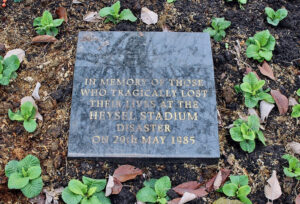
A tough test for journalistic accountability is what you do when you are caught up in a serious incident and become part of the story.
I was sent to Brussels in 1985 to cover the European Cup final between Liverpool and Juventus at the Heysel stadium. My brief was to travel with the fans and file regular reports on the atmosphere building up to the game, during the game, and after the game. Three sports reporters were covering the game from the commentary box. I was the news reporter on the terraces.
The trouble began long before the kick-off. The stadium was in a poor state. The terracing was crumbling. It was hot. The wire fence separating the two sets of supporters buckled under pressure. The crowd surged. Police charged and fans ran to escape the batons. A wall collapsed. People were crushed. Fans from both sides began trying to dig people out of the rubble. I helped. In that moment, my calculation was clear: the story could wait, crushed football fans could not.
As a result, I was not first with the story. I filed my report three hours later once I had managed to push through the police cordon and get injured in doing so. My report was an eyewitness account of what had happened on the terracing – which turned out to be the only such account broadcast from the ground that day.
Not once was I reprimanded by the BBC. The support I received from senior editors reflected something important: being first was not the point – doing the right thing, and being able to add context and depth as the story developed, was. In all, 39 people died at Heysel. 600 were injured. My injuries as a result of being hit by a police baton across both legs were minor.
Journalism exists to serve people. When human life is at risk, being first with the story is not the priority. No reputable editor will tell you otherwise.
▸ Takeaway
This example shows accountability on a human level. I was the only reporter to witness the loss of life close up. I had exclusive eye-witness material. I needed to get it to the studio as soon as possible. But being first with the news was set aside because human life was at stake.
See: Covering a tragedy — scenario
Resisting pressure and knowing when to refer up
Across all four of these situations, one principle holds: no journalist should face difficult decisions alone. The trespass decision was made with a senior editor. The Heysel decision was taken in a split second but validated by managers who trusted my judgement. The industrial dispute reporting was grounded in editorial guidance about how to handle conflicting claims. The error reporting about the fire in a residential block of flats was corrected immediately in my next live broadcast.
If an assignment takes you somewhere ethically difficult – into potential trespass, into physical danger, into a situation where the right reaction feels at odds with your duty as a news reporter – your first step is to refer up, if possible. Involve your editor. Get your organisation’s legal advice if necessary. Document your reasoning.
Accountability operates within a chain of editorial responsibility. That chain is there to protect you, to protect the people you report on, and to protect the trust of your audience.
▸ Takeaway
If a decision feels ethically difficult, you probably should not be making it alone. Refer up. That’s not a weakness, it’s good editorial practice.
Owning mistakes clearly and quickly
A journalist who broadcasts or publishes false information, however inadvertently, has an obligation to correct it. That correction should be as prominent as the original error, as prompt as possible, and should tell the audience exactly what was wrong and what is right. Corrections that are buried, delayed, or phrased vaguely damage credibility far more than the original mistake.
The fire story I described above required a correction, and luckily, because I was reporting live from the radio car, I was able to do that in an instant. The lesson I took from that experience stayed with me throughout my career. Audience trust is built slowly and lost quickly. Maintaining it means treating corrections not as an embarrassment but as an obligation.
▸ Takeaway
A clear, prompt correction is a sign of integrity, not weakness. The audience is more forgiving of honest error than of apparent cover-up.
What accountability is not
Accountability is not the same as caution. A journalist who refuses to go to difficult places, ask hard questions, or challenge official versions of events in order to avoid risk is not being accountable. They are being passive, and their audience will eventually notice.
Accountability is also not the same as compliance. Journalists who soften their findings, kill stories, or accept the framing offered by powerful interests because it is easier than pushing back are failing their audience, not serving them.
The question to keep asking, at every stage of every story, is simple: can I defend every decision I have made here? To my editor, to the people I have reported on, to my audience, and to myself? If the answer is yes, you are doing your job. If it is not, you have more work to do.
Accountability is not about playing it safe. It is about being able to justify every decision you make before you make it, not after.
▸ Takeaway
Treat corrections as a professional duty, not an embarrassment. Accountability is not a constraint on good journalism. It’s what good journalism is made of.
Note: The scenarios referenced in this article are drawn from my time as a reporter at BBC Radio Merseyside. Details, background, and discussion questions for each can be found via the links below.