
What does a sub-editor do? This guide covers the core skills, key responsibilities, and modern demands of sub-editing across print and digital newsrooms.
Sub-editors are the backbone of a newsroom. They bridge reporting, writing, editing, design, and publication, ensuring that every story meets the highest standards of accuracy, clarity, and editorial integrity.
Whether working on breaking news or long-term publications, their contribution is essential in transforming raw reporting into trustworthy, professional journalism that audiences can rely on.
A sub-editor (often called a copy editor) plays a pivotal role by using their editing skills to transform a draft into a flawless, engaging story for readers.
It is their immense responsibility that gave rise to the famous journalistic maxim: “Reporters write the paper but sub-editors make it.”
Some of the important responsibilities a sub-editor and senior sub-editor should keep in their mind are as follows.
Understanding house policy
A media organisation’s house policy refers to the internal operational rules, procedures, and ethical codes of conduct that govern its newsroom.
A weak editing desk inevitably leads to a fragile publication. A sub-editor’s primary job is to present news clearly, accurately, attractively, and ethically.
- Every piece of news must align with the organisation’s editorial stance and house policy.
- They must never pass a story that could unnecessarily defame the outlet or invite legal trouble.
- If a story raises red flags or doubts, it should be put on hold and immediately discussed with senior editors.
News sense and story selection
A newsroom is flooded with updates from countless sources every minute. A sub-editor must instantly determine what constitutes actual news and what does not. This instinct is known as news sense.
- Using this sense, they evaluate the news value of a story.
- They decide its placement (e.g., front page, inner pages) and how many columns or space it deserves.
Design awareness and page planning
Visual presentation is essential for attracting readers. A sub-editor decides which story becomes the lead (front-page banner), the second lead, or a single-column brief. Especially in print journalism, having a clear mental blueprint of the overall page layout and visual look is crucial.
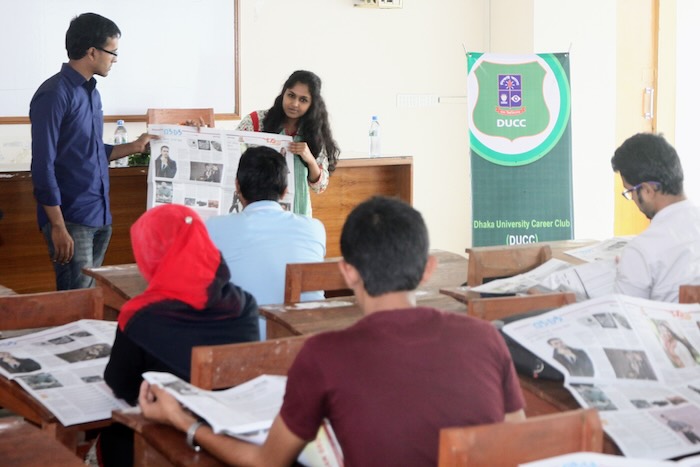
In many newsrooms, particularly in print newspapers, sub-editors, who work for feature and magazine departments, editorial section and the central desk, are not only responsible for editing copy but also play an important role in planning and producing daily pages and special supplements.
Page layout and page makeup involve the strategic arrangement of text, headlines, photographs, caption, graphics, and other visual elements to ensure clarity, balance, and reader engagement.
While graphic designers and page makeup teams often handle the technical design and production aspects, sub-editors usually make the primary decisions regarding content placement, space allocation, and the overall presentation of stories, following the guidance of editors and news editors.
Page design and visual presentation
Whether in print or digital, a sub-editor’s eye for layout is as important as their eye for language. Good design serves the story – and good sub-editors know the difference between a page that guides the reader and one that loses them.
Language and grammar mastery
Exceptional command over grammar, syntax, and vocabulary is non-negotiable. A sub-editor must be able to spot awkward sentence structures or passive phrasing instantly.
- Condensation: They must possess the ability to trim long, wordy drafts into tight, concise copy following the outlet’s specific stylebook.
- Objective diction: Journalism differs from creative literature. Literature allows for personal writing styles, whereas journalism demands neutrality. Sub-editors must be masters of precise and easily understandable language.
A note on stylebooks and house style
Most newsrooms follow a house style guide – a document setting out that organisation’s specific rules on spelling, punctuation, and usage. This may draw on a published industry stylebook but reflects the choices made by that particular outlet. Sub-editors are its guardians. For working examples of how major newsrooms approach this, see the BBC News Style Guide and the Guardian Style Guide.
A sceptical mind and a vulture’s eyes
A great sub-editor is inherently sceptical. They must treat every incoming draft with an analytical, questioning eye. A single overlooked mistake can destroy the credibility of an entire report and severely damage the reputation of the media house. Sub-editors should never blindly trust a reporter’s draft without verifying the core facts.
The golden rule is to assume that the exact line or paragraph you fail to scrutinise is precisely where an error is hiding.
Analytical skills and objectivity
A sub-editor must be a master of detail. They must use their analytical power to challenge facts, dates, names, and even individual words. Crucially, they must know how to separate factual reporting from hidden opinions, gender or social biases, and one-sided narratives tucked inside a draft.
Vast general knowledge
Because stories covering anything from politics to quantum physics land on their desks, a sub-editor must be a generalist with a massive repository of knowledge.
- They need a strong grasp of national laws, governance, politics, history, geography, and international relations.
- They must stay updated on socio-economic trends and human-nature conflicts.
- Regular reading of books, magazines, and journals is highly recommended, alongside tech-savviness to utilise stable internet connections for swift fact-checking.
Time sensitivity and swift decision-making
Time is the ultimate currency in journalism. When a draft reaches the editing desk, the clock is ticking, and the deadline is looming.
- Print v digital: While print sub-editors might get a few hours to quietly filter, edit, and reconstruct a story before the evening printing deadline, online/digital sub-editors operate in seconds.
- Digital sub-editors: Must select, edit, and publish stories instantly. However, speed should never compromise accuracy; hasty decisions must still be wise decisions.
Creativity and dynamism
Sub-editing is not a mechanical job; it requires a creative spark. A sub-editor transforms a dry report into a compelling read by writing punchy headlines, engaging sub-heads, and captivating intros (leads). They must find genuine enthusiasm and joy in polishing raw text.
Interpersonal and team skills
No journalist knows everything. A sub-editor who is approachable, easy to work with, and a team player can easily collaborate with reporters and correspondents in the field to clear up any confusions. Good communication skills eliminate friction in a high-stress newsroom environment.
The modern edge: Essential digital skills
Visual literacy & multimedia sense
Modern journalism is highly visual. Sub-editors today must know how to complement a text story with appropriate multimedia elements. This includes selecting the right feature images, infographics, data charts, or video clips, and writing sharp, context-rich captions.
Technical awareness and fact-checking tools
With the rise of deepfakes, AI-generated content, misinformation and disinformation, a modern sub-editor must act as a digital gatekeeper. Familiarity with advanced fact-checking tools (like reverse image searches, video verification software, and database cross-referencing) is essential.
SEO and digital headline writing
For digital and online news portals, mastering SEO (search engine optimisation), GEO (generative engine optimisation), and AEO (answer engine optimisation), and their impact on how content is found and ranked. Sub-editors must know how to integrate relevant keywords so that the article ranks high on search engines, while crafting headlines that are click-worthy (engaging and honest) rather than clickbait (misleading). See: Journalism that AI will trust and promote.
The range of sub-editing roles
The news desk
- The news desk is the most fast-paced environment in the newsroom. As explained earlier, sub-editors here work under constant deadlines, often preparing breaking news and daily reports for immediate publication.
- Their work begins with verifying accuracy – checking names, dates, figures, quotes, and sources. They ensure that the story is factually correct, properly attributed, and free from ambiguity. They refine structure and language for clarity and speed of comprehension, write or edit headlines and captions, and ensure editorial style and tone is maintained.
- Sub-editors at the news desk must also make quick editorial judgements. They decide what is essential, what needs tightening, and how to present information in a way that is clear, neutral, and impactful under time pressure.
The features department
- In the features department, sub-editors work on long-form and narrative-driven journalism where depth, storytelling, and tone are central.
- Their role goes beyond correction. They focus on shaping the story’s flow, improving readability, and ensuring that ideas are logically structured and clearly expressed. They preserve the writer’s voice while refining clarity and coherence.
- Feature sub-editors often work closely with writers through multiple rounds of editing. They help reorganise sections, simplify complex arguments, remove repetition, and strengthen transitions between ideas. Attention to nuance is essential, as feature stories often rely on context, interpretation, and human storytelling.
Supplements and special sections
- Supplements and special sections – such as weekend magazines, lifestyle pages, thematic editions, or investigative digests – require a more curated and design-aware approach.
- Sub-editors here coordinate closely with design and layout teams to ensure that text and visuals align effectively. They maintain consistency across multiple stories contributed by different writers, and ensure a unified tone and editorial identity for the entire section.
- They also play an important role in structuring content packages, selecting supporting elements such as captions, summaries, and sidebars, and ensuring that each piece fits within the broader theme of the publication. Precision, consistency, and presentation are equally important in this space.
Yearly publications and special editions
- Yearly publications and special editions involve long-term planning and extensive content management. Sub-editors working in this area handle large volumes of material collected over weeks or months.
- Their responsibility is to ensure consistency across time, contributors, and formats. They standardise language, terminology, and style; cross-check repeated information; and ensure factual alignment across different sections.
- They also help organise content into a coherent structure that reflects the publication’s purpose – whether it is an annual report, a retrospective issue, or a thematic compilation. This role requires strong editorial judgement, patience, and the ability to manage complexity over extended timelines.
Summary
Sub-editors are far more than proofreaders. They are the final line of defence between a reporter’s draft and the reader. They check facts, enforce house style, shape structure, write headlines, and make split-second editorial judgements under deadline pressure. Across news desks, features departments, supplements, and special editions, their work is what transforms raw copy into journalism that is accurate, clear, fair, and trustworthy. In the digital age, that role has expanded further still, demanding fluency in SEO, multimedia, and verification tools. A newsroom without strong sub-editing is a newsroom that will eventually get something wrong. That is why, decades after the maxim was first coined, it still holds true: “reporters write the paper, but sub-editors make it.”