Newsrooms committed to diversity, in terms of both staffing and coverage, must also deal with the psychological toll that discrimination takes on journalists.
Diverse representation in news enriches journalism by reflecting the full breadth of society. But for many journalists, that contribution comes at a personal cost.
Belonging to a minority group that has historically faced discrimination or marginalisation can carry a significant burden on mental health and well-being. Such experiences shape, and sometimes strain, the lives of journalists navigating these pressures at work.
Diversity and trauma in the workplace
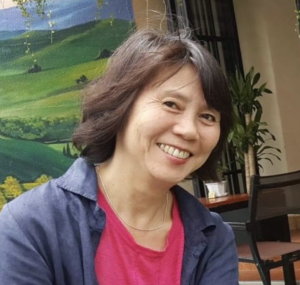
I am a British Chinese journalist and media consultant based in the UK. If you were to drop me in Beijing, I would go unnoticed against the 20 million or so other Han Chinese. However, as soon as I opened my mouth, I would instantly be marked out as a foreigner — with my handful of Mandarin words uttered with a strong British accent.
Put me in a newsroom in an English city, and the editors might be tempted to assign me to reports about ethnic minority communities in the UK in the belief that I might gain trust and find stronger stories.
Timing, as well as geography, has an effect. In the early days of the COVID-19 pandemic, I was sometimes regarded suspiciously, and people would move away from me on public transport in London because of the news that the virus might have started in a market in Wuhan, China.
In many parts of Europe, Black and Asian journalists will be in the minority. However, staff in a Sri Lankan newsroom will almost exclusively be of South Asian descent. Here, it is Tamil and Christian journalists who will be in a minority in the capital, Colombo.
What’s in a name?
By a quirk of my unusual start in life, I have a Jewish-sounding name. When I was working as a BBC journalist, I sometimes had to ring press officers at Jewish organisations. They couldn’t see my face; they only knew my name and could hear my voice. I could tell from their responses that they had assumed I was Jewish. This gave me an insight into the emotional pressure which journalists from minority communities face. They can be expected to act as advocates, and, on occasion, apologists for their communities. I could see that they would feel pulled in different directions.
Labelling and pigeonholing
Journalists from minority communities around the world have complained that they are often required by their editors to cover stories reflecting their own communities. Sometimes this works to their advantage giving them opportunities especially at the start of their career. However, it can be limiting if they are confined to such roles. Some also end up just doing translation work which can have a negative effect on their career progression.
Imposter syndrome
The move to increase diversity comes with its own pressures, causing some journalists from minority backgrounds to feel they need to prove they are as good as the other journalists in the newsroom. Some are working in their second or third language and are worried that their use of the language which is broadcast or published in isn’t as good as the native speakers.
Trying to fit in while staying true
A new job is a challenge for everyone, but if you are also finding your way in a different culture it’s an added complication. The desire to fit in can conflict with wanting to retain your heritage and original identity.
Secondary and vicarious trauma
Every journalist can be traumatised by covering distressing events. It can be particularly painful when you are in the field witnessing the tragedy. Research now shows that journalists who are editing distressing images and eyewitness accounts can also feel trauma. This is called secondary or vicarious trauma. See: Secondary trauma in the newsroom.
However, the tragedy may be felt more keenly by journalists from those communities affected by the adversity. For them, it’s not just another foreign news story or a story from the disputed region, it’s their story. Their editors may not realise the additional emotional toll when they casually ask the journalist to cut 30 seconds of video of the bombed school, or to translate the words of a distraught parent, but they should. See: Journalism trauma: why cultural context matters.
News can be overwhelmingly negative, and it can feel especially so if you’re a journalist from a country or region affected by conflict and hardship. What if the negative stories are always about your community?
When ethnicity, religion or community is seen as the enemy
In 2022, The Pew Research Center in the US found that 27% of Black journalists, 20% of Hispanic journalists and 27% of Asian journalists experienced online abuse based on their race or ethnicity. This compares to just 5% of white journalists surveyed. After a terrorist attack or a high-profile crime, people from the same community as the perpetrator(s) can end up being vilified. It creates anxiety for everyone. Imagine what it must be like to be from a group which is regularly stigmatised?
Different types of trauma
Many journalists encounter traumatic events in the course of covering news, but those from countries that have recently experienced war, conflict or natural disasters might have had greater exposure. It is helpful to understand some of the forms trauma can take.
- Single event trauma:
- In journalism, single-event trauma refers to the acute psychological distress caused by a one-off crisis such as a mass shooting, extreme violence leading to injury and death, or a natural disaster.
- Because such events are sudden and distressing, they can lead to intrusive memories, disturbed sleep, heightened anxiety, and other changes in behaviour.
- Community-linked trauma:
- This form of trauma is experienced by groups of people connected by place, identity, culture, or shared history. Its effects are both individual and collective, which means recovery has to take place at a community level as well as a personal one.
- This type of trauma follows events such as an earthquake, industrial accidents like Chernobyl, or conflicts which affect entire communities as seen in Rwanda and Bosnia.
- Intergenerational or transgenerational trauma:
- This refers to severe harm experienced by one generation that continues to affect those who follow. It may arrive from events such as enslavement, genocide or the loss of lands, culture and identity through colonisation.
- Its effects can appear in later generations as hypervigilance, anxiety, or a difficulty feeling safe amongst others.
- Conflicting loyalties and obligations:
- Many journalists will feel a loyalty to their family and community, but for those journalists from communities which have traditionally been repressed or marginalised – there will be an additional pressure on them to support their communities.
- The burden is unique and largely unacknowledged, but it places a heavy mental toll. Representatives from that community might wonder why you aren’t doing more to support your people.
- It’s not just your loyalty which will be called into question but your very identity. You might be asked whether you are really from the community if you appear to be doing little to fight for their cause?
- Survivor guilt:
- There may be guilt at not just surviving when others perished but also the guilt of thriving. You will be seen as having a prestigious job. Outsiders may not realise that journalists don’t earn big salaries, but they will still be expected to send money back home.
- This creates an additional financial burden. Journalists from minority backgrounds can get comfort and support from others in a similar position but with that comes the risk of being seen as a group which sees itself as victimised or deserving special treatment.
- All these factors can lead to burnout. It takes measures at an institutional and structural level to ensure that journalists from minority backgrounds are fully supported.
- Community-linked and collective trauma:
- Media houses have made progress in building teams which better reflect the diversity of their audiences and add an international frame of reference. However, this should be accompanied by an awareness of the trauma that journalists from different backgrounds might carry.
- Certain stories can trigger trauma responses when the minds of the journalists involved link, consciously or unconsciously, to earlier experiences, which can result in flashbacks, stress, anxiety, and other physical distress.
- It means being aware of anniversaries, court verdicts, and other possible triggering events, as well as keeping an eye on unfolding local and global events which might affect the physical safety and mental well-being of their staff. See: Trauma and stress action plan for newsroom managers.
Suggested measures to aid resilience
The following is a list of suggestions for surviving all the scenarios mentioned above.
- Maintaining a healthy lifestyle
- Time with family and community
- Time away from family and community sometimes helps, but be aware that over-working or hyperproductivity can be a symptom of post-traumatic stress
- Create boundaries with your community: only agree to promote things which you can genuinely stand behind. Be explicit about what you can and cannot afford to give
- Recognise that marginalised communities can feel vulnerable and that the robust discussions, which are common in newsrooms, can feel like a betrayal to them
- Making others feel guilty is a technique of persuasion. Be aware that you might be being manipulated, sometimes this is done unconsciously
- Step back and have a break from triggering stories
- Be aware of how local and global events affect how some communities are seen
- Explore the challenging issues of diversity in greater depth. Sometimes the opportunity to research and report more on the topic helps because the journalist feels useful to their community
- Extend the reach of your social sphere. Don’t just connect with people in your own community. Find others with shared values, build trust and reciprocity
- Receive and give support to your all colleagues – listening, talking and understanding
Managing trauma and stress
We have an entire section of Media Helping Media covering trauma and stress in journalism. With free articles, guides, workshops, lessons, and tools which are available to download, adapt, and use.