In association with Fojo Media Institute, Linnaeus University, Sweden

Strategy

TV production gallery, image by David Brewer released via Creative Commons BY-NC-SA 4.0

The project management process

In this example, we were asked at short notice to help produce a televised debate between political candidates before a general election. We had three-and-half weeks to make it happen.
Image by CM David released via Wikimedia Commons

Creating a converged newsroom

A converged news operation offers improved quality control, more efficient workflows, cost savings, a steady flow of original journalism across all devices, and new resulting business opportunities.
Photograph of Journalism training in Vietnam by David Brewer released via Creative Commons

Managing people and setting objectives

Media managers need to set clear objectives for all staff in order to get the best out of those who work for the news organisation.
The podcast studio at Petit Press using the DAM - Image courtesy of Petit Press

Moving to cloud-based publishing

Discover how a media house in Slovakia slashed costs, increased productivity, and introduced newsroom efficiencies by publishing in the cloud.
Image by Vera Kratochvil released via Creative Commons CC0 1.0 Public Domain Dedication.

Establishing a market differential

This article sets out the process for producing original, in-depth, issue-led journalism designed to inform the public debate.
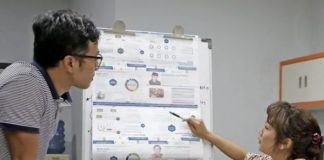
Project management image courtesy of pxhere and released under Creative Commons Universal

Project management in media

A media organisation must always remain alert to changing audience demand and behaviour. This involves continually examining what is produced to ensure that it is relevant to those who consume it.
Newsroom collaboration graphic created with Gemini AI

Planning a journalistic collaboration

Here we look at the practical steps needed in setting up an editorial collaboration with another news organisation or other information source.
Image by Werner Anderson released via Wikimedia Commons (CC BY 2.0)

Creating a current affairs programme

In this article we look at the steps involved in creating a radio news and current affairs programme based on the needs of the target audience.
Sudanese journalist working on a project plan - image by David Brewer of MHM

Community radio project plan

Launching a community radio station is a complicated exercise with lots of overlapping elements. The most important thing to do, before you do anything else, is to stop and think.
Image by ILO/Giorgio Taraschi released under Creative Commons

Funding the news – a guide to sustainability

Sustainable business models for media managers launching outlets in tough economic climates. Explore resilient strategies for long-term growth and stability.
Image by Ben Sutherland released via Creative Commons CC BY 2.0

Newspaper audience research

Audience research is essential if a newspaper is to remain relevant and generate revenue, but some publishers fail to gather adequate audience feedback.
Image of a researcher carrying out an audience survey - created using Imagen 3 by David Brewer of MHM

Audience research and segmentation

In a rapidly shifting media landscape, where consumers have more choice than ever, a deep understanding of the audience has become essential for all media companies.
Convergence graphic created by MHM with Microsoft AI Image Creator

Convergence: transforming news production

Introducing a converged news operation is rarely easy. Those trying to introduce changes in workflows, roles and responsibilities are often met with resistance.
Image by 401(K) 2012 released via Creative Commons CC BY-SA 2.0

Developing a media sales strategy

Sales is one of the most important elements of a media company's commercial strategy. The sustainability of the business relies on its ability to generate income.
Project management image courtesy of pxhere and released under Creative Commons Universal

Project management skills

Successful media projects, whether new programmes, live event coverage or product launches, rely on following specific regulatory rules and industry guidelines.