Interviewing trauma survivors is a core journalism skill. Learn how to talk to someone who has endured personal loss, suffered conflict, displacement, or abuse.
Interviewing someone who has lived through trauma is one of the most demanding skills in journalism. Done well, it can produce testimony that is both accurate and deeply human. Done badly, it can cause real harm – to the survivor, and to the story.
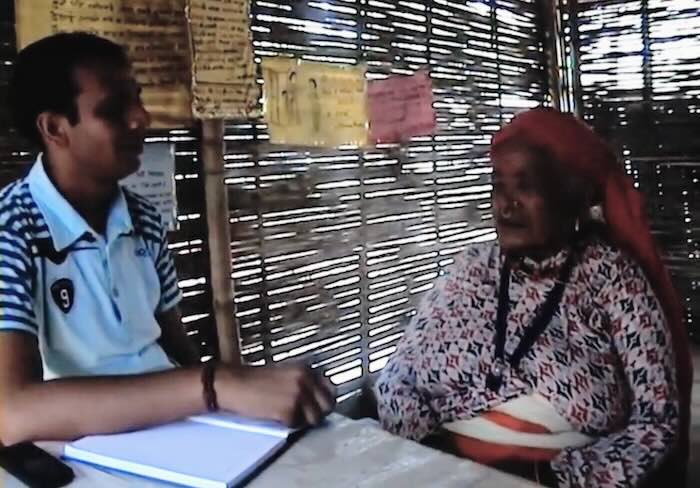
The following is based on my personal field experience – from refugee camps in Nepal to oral history projects in the United States.
Its purpose is to set out how to prepare for a trauma interview, how to conduct it with care, and how to make sound ethical decisions when the recording stops.
One of my first experiences of interviewing a traumatised person was in the home of a senior Bhutanese leader in Kathmandu, Nepal.
Two years after being released from a lengthy prison term in Bhutan, he agreed to an interview reflecting on his incarceration and life after freedom.
I was expecting a structured account of political events and learning about the decisions that led up to his imprisonment, instead I learnt some of the most important lessons about how to interview a trauma victim.
As the conversation moved to his personal experiences in detention, the tone changed completely. He went quiet, and the silence stretched. Then, without warning, he became agitated. He raised his voice, shouting fragments of anger and pain that had clearly been torturing him for years.
In that moment I had two choices – to press ahead with questions I had hoped to ask, or to continue the silence and allow space for what was emerging. I chose to wait.
What followed was not a neat narrative of politics or chronology, but something far more meaningful, informative, and, above all, human – memories of fear, isolation, trauma, and survival.
Years later, while conducting oral history interviews for a national museum in the United States, I found the same pattern repeating itself: silence, emotional breaks, long pauses – and then, unexpectedly, truth emerging in fragments. Those experiences taught me something simple but essential: trauma does not disappear in the presence of a journalist. It continues in the background, reshaping and reframing how stories are told, and how they need to be received.
For journalists interviewing people who have suffered trauma, the challenge is not only to ask questions, but to understand when not to speak.
Preparation before the interview
Trauma interviews begin long before the first question. Detailed preparation is essential. It’s crucial that you avoid assuming you already understand the story. Research the context, timeline, and background. You need to know your facts because trauma affects memory, sequencing, and emotional recall.
During my years reporting inside refugee camps in Nepal, I often interviewed people whose memories did not align neatly with official records. Over time, I learned that emotional truth and the actual order in which events occurred are not always the same. Trauma does not only shape what people remember – it also shapes how they express it.
This is reflected in trauma reporting guidance from the Global Center for Journalism & Trauma, which notes that:
“trauma impacts the brain, memories and a person’s ability to vocalise their stories.”
This is not simply about memory failure; it’s about how trauma alters access to and expression of lived experience.
Pre-interviews are essential. Informal conversations before formal recording often help build familiarity and help reduce anxiety around the process. Logistics matter too. Time, space, privacy, and ensuring the interviewee feels safe.
Interview preparation isn’t about forcing a neat chronology; it’s about building a safe environment where a fractured memory can be safely expressed.
Setting the ground rules
It’s important when interviewing someone who has experienced trauma to explain the purpose of the interview, how it will be used, and ensure that you have their consent to use the material you gather. People have a right to know why they are being interviewed and how the material will be used.
Trauma often involves loss of control. Allow interviewees to set boundaries, pause, or stop at any time. This can be achieved through small, deliberate choices before the conversation officially begins.
One practical way to honour a source’s dignity is to give them full control over their presentation, such as simply asking if they would like time to change their clothes before the camera rolls.
Similarly, we must avoid walking into an interviewee’s home holding or pointing cameras and recording gear. Arriving with equipment securely packed away treats their home as a respected sanctuary first, and an interview environment second.
It’s also important to recognise that even the word ‘interview’ itself can carry emotional weight. For many former Bhutanese refugees, the term is not neutral. It was used repeatedly by state authorities during expulsion, by border officials during displacement, by humanitarian agencies in camps, and again during resettlement processes.
Over time, it became associated with scrutiny rather than storytelling. In such contexts I found that using the word ‘conversation’ rather than ‘interview’ shifted the tone significantly and reduced institutional pressure.
When interviewing trauma survivors, your role is not to be a rigid investigator of timelines, but a steady anchor for their emotional truth.
During the interview – technique and sensitivity
In moments where interviews shift into emotional territory, the interviewer’s role is not to redirect the conversation, but to remain steady and present. This approach is strongly reflected in the Global Centre for Journalism & Trauma style guide for trauma-informed journalism, which emphasises that:
“Good and sensitive interviewing is of course central to all good journalism. But when you’re dealing with trauma victims and survivors, these skills are especially important.”
One technique I have consistently used is to avoid immediately setting up my recording equipment. I begin with an informal conversation so that the person can settle before any formal process begins. Only later do I seek permission to record. This helps reduce the sense of intrusion and makes the exchange more human.
Another tactic is to avoid blame-based questions. Focus instead on what people saw, heard, and experienced. And don’t over-focus on emotional reactions. These might make good headlines, but the aim of the interview is to enable the interviewee to open up so that they can share information that has not previously been known – and to enhance understanding of their situation.
Avoid the temptation to use constant verbal fillers or backchannel responses. In everyday conversation, we naturally nod along and say things like “yes,” “right,” or “I see” to show we are engaged. In a trauma interview, these micro-interruptions can be jarring. They can break a survivor’s fragile train of thought or inadvertently signal impatience.
True listening requires us to suppress the urge to fill the air, managing our own conversational habits so the speaker has total control over the silence.
Start slowly. Use open-ended questions. Follow the interviewee’s lead. Silence is part of the process, not a gap to be filled.
Special considerations by interviewee type
Trauma-informed interviewing is never uniform.
Children require simple language and slower pacing. The child’s comfort remains central. Consent from guardians is essential. People with disabilities may require additional time or communication support. Assumptions about capacity must be avoided.
Survivors of sexual violence require strict confidentiality and careful, non-intrusive questioning. Control over disclosure must remain with them.
Witnesses of trauma may experience psychological effects similar to direct survivors. Their testimony should be treated with equal seriousness.
People in acute crisis require prioritisation of safety over having their experiences recorded then published or broadcast. In some cases, the most ethical decision is not to proceed.
Across all contexts, the principle remains the same: adapt to the person, not the narrative.
After the interview
End interviews gently. Abrupt closure can be jarring after intense emotional disclosure. A trauma-informed journalist never packs up their gear and rushes immediately out the door the moment the official recording stops. Instead, take a deep breath, sit with the source and their family, and spend time simply being present.
In fact, one of the most critical windows of communication occurs during this transition. When the pressure of the microphone or camera is removed, survivors often experience a profound wave of relief. It’s during this quiet, unrecorded time that they may surprise you by dropping their guard and disclosing important information off-camera – give them your full attention.
Where appropriate, signpost support systems. In one oral history project in the United States, a counsellor from the same refugee community was made available during interviews. She was never needed, but her presence mattered as an ethical safeguard.
Furthermore, respect means maintaining complete transparency about the lifecycle of their story. Journalist must:
- Fulfil every promise you make.
- Explicitly communicate what happens next with the recording.
- Outline who will have access to it.
- Offer the interviewee the space to review the material or record additional information on another day if they feel important elements were missing.
One of the most difficult ethical decisions I have faced involved a survivor of trafficking who requested that her story be recorded. I recorded it, and, at the time, obtained her consent to publish it. However, between recording and planning to publish the interview, her personal circumstances changed. A responsible journalist has an ethical duty, if the context for an interview changes, to contact the trauma victim they interviewed again to make doubly sure that, in the light of new developments, they are still happy for the material to be made public.
In communities where people were historically denied a voice, representation itself can be meaningful. I have found that sharing recordings back with participants – and providing a copy if they request it – often leads to a strong sense of recognition. People hear their own voice and see their experience acknowledged, sometimes for the first time in a formal setting.
However, always manage expectations; be honest that final archival or editorial boards may have the ultimate say on what enters the public domain, and use those moments as opportunities to seek feedback and improve your craft.
Ethical responsibility for an interview with a victim of trauma does not end when recording stops.
Ethical and editorial decisions
Ethical decisions in trauma reporting rarely have clean answers. They involve balancing public interest, potential harm, and respecting the dignity of the person whose story is being told.
Not everything shared in an interview is meant for publication. Editorial judgment includes deciding what to leave out as much as what to include. See: Why editorial ethics are important.
Anonymity is often necessary in contexts involving displacement or vulnerability.
Editors are rarely present during interviews, so contextual framing is essential when working with sensitive material.
Legal considerations matter, but legality alone is not sufficient for ethical decision-making.
This principle is echoed by trauma journalism expert Tamara Cherry:
“trauma-informed journalism means understanding trauma, understanding what a trauma survivor is experiencing before you show up at their door, and understanding how your actions will impact them after you pack up and leave.”
Ultimately, restraint is part of responsibility. Some truths are ethically more important to hold than to publish.
Conclusion
Trauma-informed interviewing is not about avoiding difficult questions. It is about asking them responsibly. From refugee camps in Nepal to oral history work in the United States, I have learned that the strongest interviews come from patience, preparation, and listening.
In trauma interviewing, better listening produces better journalism. The result is reporting that is both accurate and humane.