
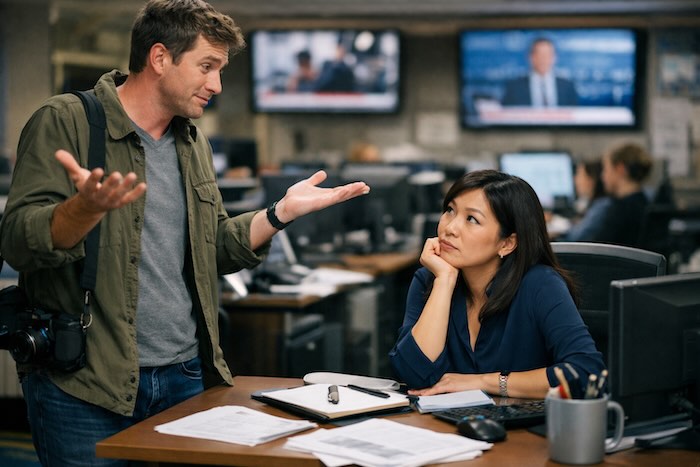
 When journalists fail to file a story it can sometimes reveal skill gaps. This exercise illustrates what editors hear and which training might fix the problem.
When reporters come back without a story
Here we look at:
- Common excuses a journalist might make for failing to cover a story.
- What the editor interprets when hearing an excuse.
- The editor’s advice to the reporter.
- What training the editor might suggest to ensure it doesn’t happen again.
Equipment & logistics excuses
What the reporter says:
- My phone battery died.
- My recorder didn’t work.
- My pen ran out.
- There was no signal.
What the editor hears:
- You didn’t prepare properly or think ahead before you set out.
What the editor thinks the reporter needs to learn:
- Always carry backups.
- Think ahead about failure points.
- Treat logistics as part of journalism, not an afterthought.
- Never rely on one tool, one device, one method.
The editor might suggest the following training:
- How to cover a news event
- Adopting the big story approach
- Mobile journalism (MoJo) basics
- Forward planning for newsrooms
Travel & access problems
What the reporter says:
- They’d gone by the time I arrived.
- Security wouldn’t let me in.
- The address was wrong.
- The gates were locked.
What the editor hears:
- You didn’t verify access or prepare a plan B.
What the editor thinks the reporter needs to learn:
- How to confirm logistics in advance.
- How to negotiate access on the spot.
- How to adapt the story when access fails.
- How to report around obstacles, not stop at them.
The editor might suggest the following training:
- Newsgathering & access negotiation
- Reporting specialisms
- Investigative mindset for daily news
- Story development techniques
- In-depth proactive story development
Source-related excuses
What the reporter says:
- They wouldn’t talk.
- No one was available.
- They didn’t return my calls.
- PR blocked it.
What the editor hears:
- You accepted ‘no’ too quickly and didn’t diversify your sourcing.
What the editor thinks the reporter needs to learn:
- How to persuade sources professionally.
- How to find alternative voices fast.
- How to work beyond official channels.
- How silence and refusal can become part of the story.
The editor might suggest the following training:
Confidence & skill gaps
What the reporter says:
- I couldn’t get anything usable.
- It was too technical.
- They were hostile.
- I didn’t know what to ask.
What the editor hears:
- You lacked subject confidence and questioning technique.
What the editor thinks the reporter needs to learn:
- How to prepare smarter before interviews.
- How to structure questions under pressure.
- How to handle difficult or expert sources.
- How to keep control of an interview.
The editor might suggest the following training:
- Interviewing politicians
- Interviewing remotely
- Reporting under pressure
Time management issues
What the reporter says:
- There wasn’t enough time.
- It ran late.
- Another story came up.
- The deadline moved.
What the editor hears:
- You didn’t manage time or escalate problems early.
What the editor thinks the reporter needs to learn:
- How to prioritise tasks.
- How to signal trouble before the deadline.
- How to deliver partial stories when full ones fail.
- How to work backwards from a deadline.
The editor might suggest the following training:
- Deadline reporting
- Newsroom time management
- Workflow and productivity for journalists
- Breaking news operations
Editorial judgement excuses
What the reporter says:
- It wasn’t really a story.
- Nothing happened.
- There was no angle.
- It changed.
What the editor hears:
- You didn’t reshape the brief when reality shifted.
What the editor thinks the reporter needs to learn:
- How to spot a story.
- How to find story angles
- How AI can help a reporter in the field
The editor might suggest the following training:
Emotional / avoidance excuses
What the reporter says:
- It felt unsafe.
- People were aggressive.
- I didn’t want to push.
- It got uncomfortable.
What the editor hears:
- You might need support — but also resilience and safety skills.
What the editor thinks the reporter needs to learn:
- How to assess risk properly, not emotionally.
- How to report in tense environments.
- How to stay professional under pressure.
- How to balance safety with persistence.
The editor might suggest the following training:
- Hostile environment awareness training (HEAT)
- Trauma-informed journalism
- Reporting from conflict zones
Process & bureaucracy
What the reporter says:
- They needed permission.
- Comms blocked it.
- Legal wouldn’t approve.
- I didn’t have accreditation.
What the editor hears:
- You didn’t understand institutional reporting systems.
What the editor thinks the reporter needs to learn:
- How organisations really work.
- How to bypass bottlenecks ethically.
- How to plan accreditation and permissions early.
- How to work around official obstruction.
The editor might suggest the following training: