Integrity in journalism
Here we look at the importance of integrity in all aspects of journalism from story choice, who a journalists talks to and who they ignore, and how journalists can avoid manipulation. We look at possible conflicts of interest, self-censorship, withholding information, testing boundaries, transparency and full disclosure.

Integrity and journalism
Without integrity your journalism is untrustworthy and suspect. Integrity is essential if a journalist wants to investigate issues, shine a light in dark places, and to dig where others don't.

Avoiding manipulation
One of the roles of the journalist is to scrutinise the decisions made by politicians and report the implications to the public.

Interviewing integrity – scenario
In this scenario, an award-winning journalist is offered a top job at national TV station, but soon after starting her new job she discovers corruption in the media house.

Self-censorship in journalism
To combat self-censorship - a major hurdle for robust impartial journalism - journalists must first recognise why it happens and understand its root causes.

Journalistic integrity – scenario
In this scenario a political correspondent working for a broadcaster is asked to speak at an event organised by a political party - but there is a catch.

Returning favours – scenario
In this scenario a naive reporter's early success with a government minister leads to an ethical dilemma when a 'favour' is demanded in return.

Conflicts of interest
In journalism, public trust is essential for credibility. One of the most significant threats to that trust are the many possible conflicts of interest that might confront journalists.

Conflict of interest – scenario
As a political correspondent for a national broadcaster, a lobbying firm offers you a fee to train them in influencing the media. How do you respond?

Withholding information – scenario
In this scenario a journalist comes across information that changes the focus of a story the editor had asked them to write. Should they include it or withhold it.

Testing boundaries – scenario
In this scenario we look at a situation where an editor faces breaking protocol because of the strength of a story.

Transparency and full disclosure – scenario
In this scenario a reporter embedded with the military and closely monitored in a war zone wanders off and discovers a story the army wouldn't want him to tell.

Legal threats – scenario
In this scenario a local newspaper reporter faces legal threats for a factual planning application report that lacked the applicant's demanded "positive spin."

Photo journalism – scenario
In this scenario a reporter tells the newsdesk that she has a strong news story only to find that the facts were not as they seemed.

Photojournalism and ethics
The following are commonly accepted ethical guidelines for photojournalists adopted by most mainstream media.

Journalistic ethics – scenario
In this scenario a reporter feels ethically compromised after accepting hospitality from a developer who subsequently pressured them for favourable coverage.
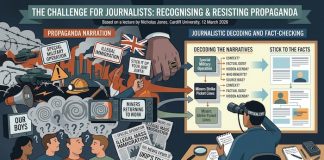
Journalism and propaganda
Journalists must recognise propaganda to avoid spin and deliver factual news. Ensuring the public is properly informed is essential for credible journalism.
Related learning resources
Quick Guide: Managing conflicts of interest
Use this checklist to manage conflicts of interest and protect your journalistic integrity. It's designed to maintain audience trust and professional standards.
Quick Guide: Avoiding self-censorship
Avoid the self-censorship trap with our quick guide checklist. Learn to identify warning signs and discover practical ways to protect your editorial voice.
Lesson: Integrity in journalism
This lesson plan teaches students the importance of maintaining integrity in all their dealing in order to investigate issues thoroughly and truthfully without being influenced by external pressures.
Lesson: Conflicts of interest in journalism
This lesson plan emphasises the importance of understanding, identifying, and avoiding journalistic conflicts of interest in order to maintain editorial integrity and public trust.
Lesson: The importance of editorial ethics
This lesson plan is designed to help journalists understand the importance of applying editorial ethics to their newsgathering and news production.
Lesson: Journalism and propaganda
This lesson plan is designed to help journalists recognise the different propaganda and discover ways to deal with it when covering news.

Module: Editorial ethics for journalists
This module provides an outline for teaching journalism students the importance of editorial ethics.

Refresher: The importance of editorial ethics for journalists
This intensive day course offers a crucial refresher on the core principles of editorial ethics, which are vital for maintaining public trust in contemporary journalism.