Advanced Journalism

Our advanced journalism section explores specialised topics for experienced journalists seeking to deepen their expertise. Develop your skills in data journalism, multimedia storytelling, investigative techniques, and complex narrative structures that elevate reporting to the next level. All our material is free to download, adapt and use.

Sebastian Solberg

How to make a documentary

A free step-by-step guide for journalists who want to learn how to make documentaries.
Journalist Bakhita Aluel adjusting the microphone at Radio Easter in Yei in South Sudan

Editing radio news bulletins

Radio bulletins offer concise updates on the latest news. They deliver key stories tailored to your listeners' interests in just a few minutes.
Image by Ed Yourdon released via Creative Commons CC BY-SA 2.0.

Examining rumour to find facts

The role of a journalist is to publish facts. To do that they often have to examine rumour and gossip as part of the newsgathering process.
Open-source intelligence - a MHM training article graphic

Open-source intelligence (OSINT) in journalism

Discover why journalists use open-source intelligence (OSINT) to verify information, expose manipulation, and strengthen public trust in the news.
The author interviewing an elderly Bhutanese refugee mother in a refugee camp in Jhapa, Nepal, in 2009

How to interview trauma survivors

Interviewing trauma survivors is a core journalism skill. Learn how to talk to someone who has endured personal loss, suffered conflict, displacement, or abuse.
Prompting AI - a MHM training article graphic

Prompting AI for journalism

When using generative AI in journalism, it's essential to create the right prompts. The quality of the prompts will define the quality of the response.
Image by Anthony Karanja released via Creative Commons CC BY 2.0

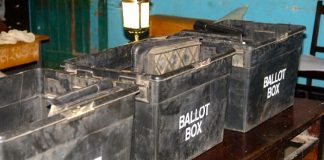
Editorial independence during elections

Election coverage is one of the most critical responsibilities of the media. It shapes public discourse, informs voters, and plays a vital role in safeguarding democracy.
Computer Assisted Reporting - a MHM training resource graphic

Computer-assisted reporting (CAR)

Computer-Assisted Reporting (CAR) refers to the use of digital tools such as spreadsheets, databases, and basic statistical analysis to interrogate large datasets.
Evidence-based reporting - a MHM training resource graphic showing a journalist researching

Evidence-based reporting

This guide provides a framework for journalists to compile in-depth reports on any topic by ensuring that all they write is based on verifiable facts.
Editorial Impartiality - a MHM training article graphic

A journalist must not have an agenda

Our role as journalists is to unearth information, prepare it and then display it for the benefit of the audience. We are not there to fabricate, manipulate or force.
Updating News Online - a graphic for a MHM training article

Managing a news website

The journalist in charge of a news website is like a shopkeeper who sets out their stall. If the items are badly displayed the customer might miss them, if they are not fresh people won't buy them.
AI in News Meetings - a MHM training article graphic

Using AI for discovering news angles

Have you ever chaired a news meeting surrounded by blank faces with no story ideas? Well, with AI that experience could be a thing of the past.

Hosted by the Fojo Media Institute

Fojo logoMedia Helping Media is hosted by the Fojo Media Institute at Linnaeus University.

Follow Media Helping Media on Facebook

MHM on FacebookCheck our Facebook page for regular updates from Media Helping Media.

Content released under Creative Commons

Creative Commons logoThe content on Media Helping Media (MHM) is released via Creative Commons BY NC SA 4.0.