
Historical context explains why a story matters. Critical history is about finding stories that have been buried. Both are essential elements of journalism.
In his article Why historical context matters in news reporting, investigative journalist TP Mishra explains why journalism without historical context is incomplete journalism.
This piece goes further. Here we look at how journalists can build an entire investigation around history itself. This is not about referring to history for background colour or context only. It’s about treating history as the primary investigative tool for uncovering what official accounts might have left untold.
Critical history is the disciplined application of critical thinking to historical material to find the stories that have been hidden rather than merely under-explained. See the article by Beat Witschi on Critical thinking for journalists.
Going beyond adding context
When we add historical context to a news story, as set out in TP Mishra’s article, we are attempting to explain what happened before an event in order to help the audience understand what’s taking place. That is important – particularly for developing news stories which would be incomplete without some reference to past events.
Critical history takes those same historical events and asks a harder question: who has an interest in this record staying unexamined? That’s a shift in focus. It stops being a sourcing habit and becomes a project – one that needs managing like any other.
And that project needs to produce far more than a backgrounder. The aim is to explain an issue through thorough research, documentation, and recorded history.
A working case study
In 2026, The Guardian newspaper ran a series of articles in its Enslaving Nation series. The aim was to look at how investment in slavery powered Britain. The project was the result of four years of academic research involving Lancaster University, with UCL (University College London), and the University of Manchester.
Together, they built the Register of British Slave Traders, a database of everyone known to have invested in the trafficking of enslaved Africans between 1563 and 1807. That register enabled researchers and journalists to trace who financed the slave trade, their location, their legacy, and who they were connected to.
The result was a fresh look at history that revealed news stories that had modern implications.
Applying the critical history approach
If you want to apply the critical history approach to an editorial project, first consider the following points.
Think of your audience: Is this a topic that affects their lives? Will they be interested in what you uncover? How can you approach it in a way that relates to those who consume your news?
Look for gaps: How is the subject normally reported or explained? What question does that explanation never quite answer? That gap is your starting point.
Collaboration is essential: Not many journalists are trained historians. Find an academic body to team up with. Consider collaborating with other journalists. See the two articles by Richard Sambrook about Collaborative journalism explained and Planning a journalistic collaboration. You are looking for partners that can bring skills you don’t have, and help you find and examine important documents properly.
Look beyond people: Don’t stop at asking “who did this.” Instead try to uncover “who paid for it, who approved it, who profited from it.” Individuals get blamed. Institutions are where the real patterns hide.
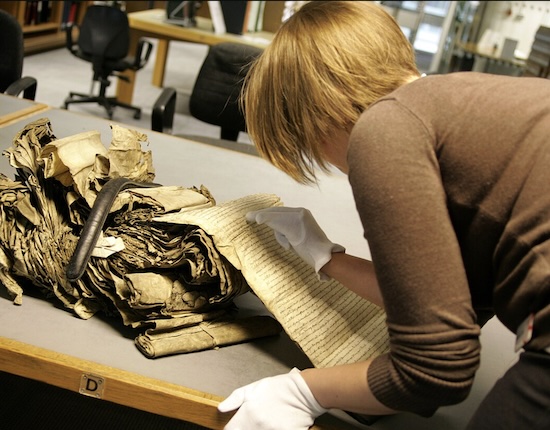
Go to original documents: Don’t rely on books or articles about the period. Go to the actual records – registers, ledgers, contracts, court papers, land records, meeting minutes. These are your primary sources. See the article by Don Ray about Investigating official documents.
Ask who made the archive: Records are often written by the powerful, about the powerful. Ask: who wrote this, why, and whose story does it leave out? Try to interpret the gaps as carefully as you do the words.
Connect it to now: History alone isn’t news. Ask: does this still matter today? Who still benefits from this staying hidden? That’s what turns research into a story.
Check your evidence: Every claim needs a document behind it. Don’t publish an interesting theory – publish a proven fact. If you wouldn’t publish it about a living person on this evidence, don’t publish it about a dead one either. See the article by Bob Eggington about the importance of Accuracy in journalism, and the piece by Vince Ryan about Why clarity and accuracy are vital in journalism.
Risks to be aware of
The critical history approach to journalism carries its own risks. It’s important to recognise these and defend against them.
Presentism: This is about avoiding judging what happened in the past solely by today’s moral standards. Instead explain historical decisions within the power structures and legal norms of their time, while still naming their consequences plainly.
Overreach: This is about treating a historical connection as a proven chain without documentary evidence – inference is not good enough for a piece of journalism.
Selection bias: Creating a version of history that fits a preferred conclusion is failing in the same way as ignoring history altogether. Journalists and researchers must agree to follow the evidence wherever it leads.
Under-resourcing: A critical history project needs the time to develop. It doesn’t sit well with the normal journalistic deadlines. Time is needed to build partnerships, gain access, set up systems for research and collaboration. All this needs to be set out before you begin.
Critical history project checklist
- Define a specific historical question to be answered. A theme is not a strong starting point.
- Identify what currently available official records currently omit.
- Identify the archives, registries and record types most likely to hold primary evidence.
- Find historians or archivists, and other news organisations to partner with.
- Agree a focus and workflow with those with whom you are collaborating.
- Decide, in advance, what standard of documentary proof will be needed before a claim is published.
- Trace institutional as well as individual responsibility.
- Ask who benefits today from the current, incomplete version of the story.
- Be prepared to turn the method on your own organisation (as The Guardian did in 2023) if the evidence leads there. This establishes your ethical credentials.