

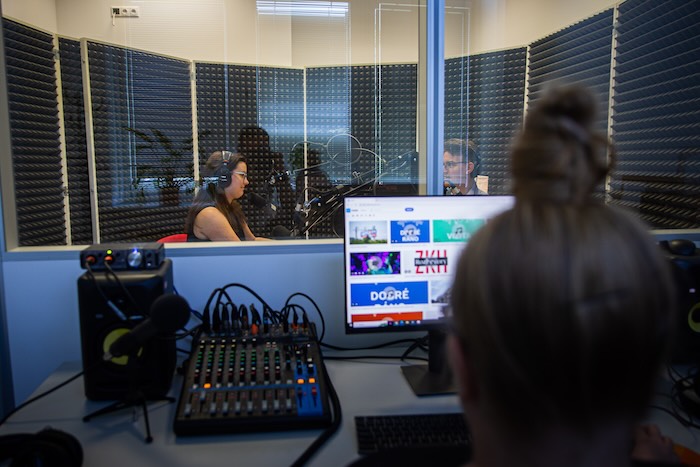
Discover how a media house in Slovakia slashed costs, increased productivity, and introduced newsroom efficiencies by publishing in the cloud.
The Cloud Engineering Department at Slovakia’s Petit Press has volunteered the following article for the benefit of other news organisations thinking of moving their operations to the cloud.
Cloud-based publishing
Here at Petit Press we migrated our entire news organisation to the cloud in 2023. It was a decision that has resulted in many strategic benefits, including:
- Cost savings: A 30% annual saving on the infrastructure budget
- Development surge: Faster development of new newsroom tools
- Production gains: A 5-10% boost in productivity
- Efficiency improvements: 5-20 minutes saved on each video or podcast produced.
Large portfolio to manage
Petit Press, operates more than 35 media outlets including SME.sk, which is one of the most visited portals in Slovakia.
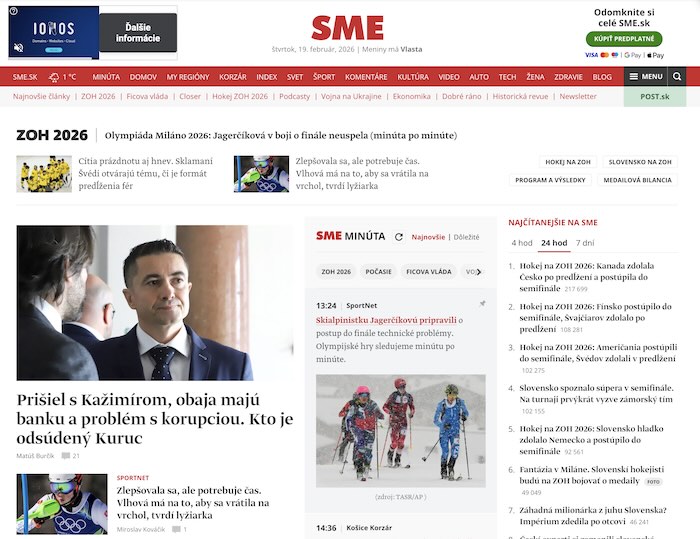 The company also runs the English-language Slovak Spectator, and dozens of regional titles. It became a digital-first company in the early 2010s.
 Digital efficiency strategy
The transition to the cloud in 2023 was a central part of the company’s modern digital strategy to streamline newsroom efficiency and reduce the technical debt of maintaining on-premises servers.
The shift was driven by the need to handle a massive volume of rich media (video and podcasts).
The newsroom was struggling with the manual labour of transferring large files between journalists, administration teams, and their various Content Management Systems (CMS).
As part of this cloud move, Petit Press built an entirely new, open-source Digital Asset Management (DAM) platform. This system serves as a unified hub for distributing and archiving media.
Impact of moving to the cloud
By moving to the cloud, the newsroom could better manage the large number of print and digital titles in our portfolio from a single infrastructure.
- What is involved:
- Moving all applications from on-premises hardware to the cloud.
- What tools are used:
- We run a multi-cloud solution: Cloudflare, Google Cloud, Hetzner, Digital Ocean, AWS, Azure, and others.
- We use IaC (Infrastructure as Code), Ansible, and Terraform.
- How savings were generated
- Fewer personnel are required for infrastructure maintenance.
- The infrastructure is built more effectively, resulting in lower monthly operational expenditure (OPEX).
- How efficiencies were achieved
- The development department no longer faces infrastructure bottlenecks.
- Developers now have automatic deployment tools.
- How it changed the business model
- We deploy new systems faster.
- We provide a faster website for our readers.
- Impact on newsgathering, production, and dissemination
- Thanks to the cloud DAM system which we developed as open source, the newsroom now handles archiving and distribution in one place.>
The team & efficiency
The skillset required for cloud operations is fundamentally different from on-premises solutions.
Restructuring can naturally bring changes within teams, and at times colleagues with more traditional skillsets may choose to move on. At the same time Petit Press created added-value cloud engineering positions thanks to the transformation.
However, this is an opportunity. With the right tools, automation, and AI, a smaller cloud engineering team can operate significantly more projects than a traditional on-premises team. This operational leverage is key to our future growth.
The cost of migration
The transition period is the most challenging part. For a duration of, say, one year, the media house faces double costs – paying for the old infrastructure while spinning up the cloud.
This period must be minimised. To achieve long-term cost savings, we needed experts who understood cloud optimisation.
Strategic benefits
While Petit Press achieved a 30% cost reduction, the cloud is primarily a tool for speed and modernisation. The benefits are clear:
- Agility: The infrastructure stops being a blocker, allowing development teams to ship features faster.
- Auto-scaling: Essential for breaking news, viral events, or national elections. We avoid over-provisioning and pay only for the capacity used during peaks.
- Storage: We can use cost-effective tiered storage for large media archives with global backup – something very difficult to achieve on-premise.
- Security: The technology, robustness and security levels are simply superior to on-premises solutions.
Ultimately, this move makes the media house more flexible and prepares us for the future.
Note: This article was submitted by the Cloud Engineering Department, Petit Press