News reporting
Here we look at what is involved in news reporting, from getting out and talking to people in the street to covering news events and reporting from conflict zones. We look at how to pitch a story to an editor, what to do when a big story breaks, why keeping records while reporting is important, and reporting responsibilities as a news story evolves.

Shoe-leather reporting
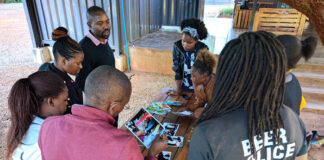
Digital noise is everywhere, but shoe-leather reporting - getting out and talking to people - remains a foundational skill for the modern journalist.
Covering a news event
Check our news event coverage guide with tips on preparation, on-site reporting, ethical interviews, and capturing compelling photos and video.
Pitching a news story to an editor
Whether you're a journalist or reporter, learn how to pitch stories effectively to ensure they are accepted by your editor every time.
The roles of reporters and sub-editors
Streamlined newspaper workflows with minimal editing benefit reporters and sub-editors, ultimately enhancing publication quality.
Pitching a news story to an editor
Whether you're a journalist or reporter, learn how to pitch stories effectively to ensure they are accepted by your editor every time.
When a ‘big story’ breaks
Big stories happen out of the blue. And when they do newsrooms have to spring into action immediately.
Adopting the ‘big story’ approach
Professional news relies on meticulous planning and coverage. Yet, some stories remain unpredictable. Explore the balance between preparation and the unexpected.
Reporting from conflict zones
When reporting from a conflict zone a journalist needs to be sensitive, understand history and cultural issues, and put people first
Citizen reporting to citizen journalism
This article was written for a group of young citizen reporters from remote rural communities in Zimbabwe who were learning how to become journalists.
Doorstepping – scenario
You are a local newspaper reporter sent out to doorstep a bereaved family but you lie to your news editor because you are reluctant to intrude on their grief.
The importance of keeping records
Journalists who want to inform the audience need to keep records so that they can add context to breaking news stories without having to rely on others for background information
Systems thinking for journalists
Systems thinking empowers journalists to provide deeper more meaningful news coverage by moving beyond surface-level reporting to uncover underlying related facts.
What is data journalism?
Data journalism, also known as data-driven journalism, is the process of finding, understanding, and processing information in order to produce news stories.
The role of the media lawyer
Many news stories involve straightforward reporting on events, but some more complex stories might require legal advice before they are published.
Computer-assisted reporting (CAR)
Computer-Assisted Reporting (CAR) refers to the use of digital tools such as spreadsheets, databases, and basic statistical analysis to interrogate large datasets.
The evolution of an original news story
Original journalism starts with a question. Our investigations transform enquiries into vital news stories with far-reaching consequences.
Related learning resources
Reporting on a news event
This checklist sets out what journalists should do when covering a live news event, including preparation and how to respond to the unexpected.
Lesson: Pitching a news story to an editor
This lesson plan provides a comprehensive guide to the essential skill of pitching a news story idea to an editor.
Lesson: Systems thinking for journalists
This lesson plan is designed to help journalism students understand how to apply systems thinking to their news stories in order to develop more comprehensive reports.