Impartiality in journalism
To provide authoritative coverage, journalists must rise above personal bias to present news without favouritism or influence. True impartiality isn't about being bland; it is the robust practice of reflecting a wide range of conflicting views and ensuring no relevant perspective is ignored. By stripping away personal preference and maintaining transparency, we empower our audience with the dignity to draw their own conclusions from a fair and accurate picture of the world.

Impartiality in journalism
For journalists, being impartial means presenting information without demonstrating favouritism towards any specific viewpoint or party.

A journalist must not have an agenda
Our role as journalists is to unearth information, prepare it and then display it for the benefit of the audience. We are not there to fabricate, manipulate or force.

Unconscious bias and journalism
Bias is a prejudice for or against a group, often leading to unfair judgements. While it's a normal human trait, understanding our biases is vital for fairness.
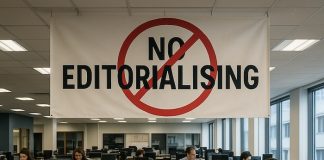
Editorialising is not for news
The free training materials on Media Helping Media are all aimed at encouraging one particular kind of journalism: accurate, fact-based, impartial news reporting.

Avoiding bias during election coverage
During elections politicians will often accuse media organisations and their journalists of bias. We look at the challenges of producing fair election coverage.
False equivalence and false balance
Journalists can sometimes present an inaccurate or false version of events by trying too hard to 'balance' a story or incorrectly treating elements of a story as being roughly equal.

Conflicts of interest
In journalism, public trust is essential for credibility. One of the most significant threats to that trust are the many possible conflicts of interest that might confront journalists.

Avoiding manipulation
One of the roles of the journalist is to scrutinise the decisions made by politicians and report the implications to the public.
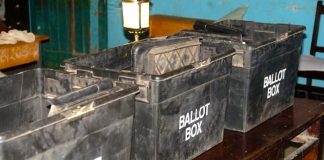
Editorial independence during elections
Election coverage is one of the most critical responsibilities of the media. It shapes public discourse, informs voters, and plays a vital role in safeguarding democracy.

Journalists and politicians
Journalism is often referred to as “the fourth estate”, and is seen as being crucial to the functioning of a healthy and fair society.

Journalism and activism
Can a journalist also be an activist for a cause without compromising the core editorial values of journalism?

Editorial impartiality – scenario
In this scenario a reporter covering a story about medical malpractice in a hospital discovers that the consultant involved is a relative. What should they do?

Emotional assumptions – scenario
In this scenario a journalist lets their own emotional assumptions colour their news judgement resulting in misinformation.

Self-censorship in journalism
To combat self-censorship - a major hurdle for robust impartial journalism - journalists must first recognise why it happens and understand its root causes.
Emotional pressure – scenario
How should a reporter respond when someone uses emotional pressure and threats to try to stop them doing their job?

Conflict of interest – scenario
As a political correspondent for a national broadcaster, a lobbying firm offers you a fee to train them in influencing the media. How do you respond?
Right of reply – scenario
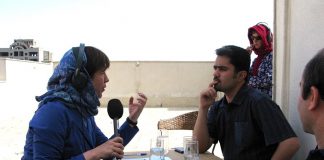
When should journalists offer a right of reply? All the time, sometimes, never? Try our ethical scenario and add your comments.
Journalism and propaganda
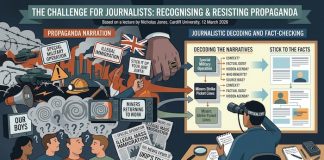
Journalists must recognise propaganda to avoid spin and deliver factual news. Ensuring the public is properly informed is essential for credible journalism.
Related learning resources
Quick Guide: Managing conflicts of interest
Use this checklist to manage conflicts of interest and protect your journalistic integrity. It's designed to maintain audience trust and professional standards.
Quick Guide: Avoiding self-censorship
Avoid the self-censorship trap with our quick guide checklist. Learn to identify warning signs and discover practical ways to protect your editorial voice.
Exercise: Understanding unconscious bias
This exercise is designed to help journalists understand how unconscious bias can undermine journalistic integrity and distort how news is covered.
Workshop: Editorialising is not for news
Journalists need to tell people, as plainly as possible, what is happening in the world. Every story should be fact-based. We must never add our own opinion.

Lesson: Impartiality in journalism
This lesson plan is designed to teach students the importance of impartiality in journalism and the avoidance of bias.
Lesson: Unconscious bias and its impact on news
This lesson plan is is designed to help students recognise their own unconscious bias and find ways to avoid bias in their journalism.

Lesson: False equivalence and false balance
This lesson plan is designed to help students avoid applying false equivalence and false balance to their news writing.
Lesson: Editorialising is not for news
This lesson plan teaches students the importance of avoiding all forms of editorialising when producing news journalism.
Lesson: Conflicts of interest in journalism
This lesson plan emphasises the importance of understanding, identifying, and avoiding journalistic conflicts of interest in order to maintain editorial integrity and public trust.
Lesson: Journalism and propaganda
This lesson plan is designed to help journalists recognise the different propaganda and discover ways to deal with it when covering news.