

 True journalism requires more than just gathering news. We rigorously examine every detail to maintain the highest factual standards.
Welcome to this Media Helping Media (MHM) exercise about fact-checking and adding context, which is published on MHM. You are invited to complete the exercise either on your own or with a colleague. Please ensure you read the article above before proceeding.
MHM exercises are designed to help those who are new to journalism learn skills and test what they know against fictional scenarios. The articles on which the exercises are based have been created from the experience of journalists who have shared their knowledge in order to help others learn the fundamental principles of robust public service journalism.
The first requirement of any piece of journalism is that it should be accurate. Although this is an exercise involving fictitious material, not for publication, trainees must take everything they are told in the exercise to be factual and they must stick to those facts. If one thing they produce in the exercise is inconsistent with those facts, their whole work is discredited.
The scenario: The Silver-Winged Warbler
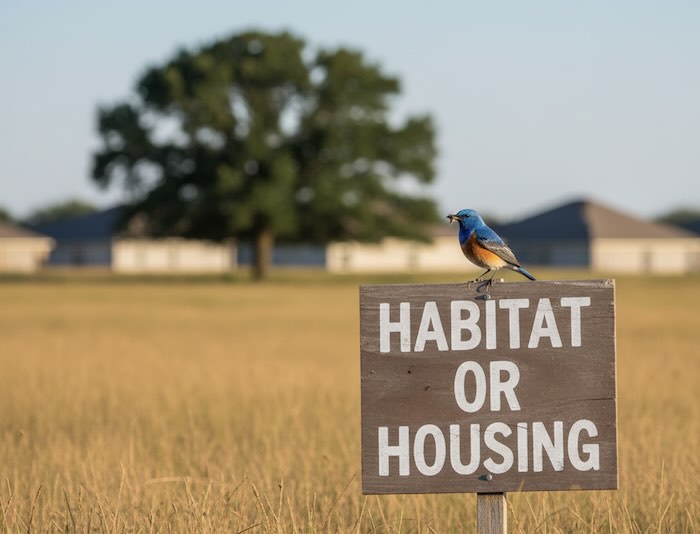
You are a reporter for the Oakhaven Gazette. You have received a heated news release from a local group called the Green Valley Alliance (GVA). They are protesting against a 500-home development named Meadow View, proposed by a company called Stonegate Homes.
The GVA news release claims:
- The development will wipe out the last 50 breeding pairs of the rare Silver-Winged Warbler.
- Stonegate Homes has “deliberately hidden” an environmental impact report.
- Councillor Sarah Miller, who chairs the Planning Committee, is a “secret shareholder” in Stonegate Homes.
Your initial research (the facts):
- The Council Register of Interests: You check the public record. Councillor Miller is not a shareholder in Stonegate Homes. However, her husband, David Miller, owns a landscaping company that has a £200,000 contract with Stonegate Homes for a different project in a neighbouring town.
- The Environmental Report: You find the report on the local council planning portal. It states there is “evidence of bird nesting” but does not specify the species or the number 50.
- The Wildlife Trust: You call a local ornithologist (an expert who studies birds). They tell you that while the bird is rare, there were only six breeding pairs recorded in the whole county last year. They have never seen 50 pairs in one field.
- The Housing Need: Oakhaven Council’s latest figures show the town has 2,400 people on the waiting list for social housing (housing provided by the local council or a non-profit organisation at lower than market rent).
So, there you have it. Your editor has told you to “check the story out” and produce a 300-word report. She has emphasised that she wants all the facts thoroughly checked.
The story has been brought to your attention because of you were sent a news release by GVA. So your first task is to fact-check all the information in the news release. This will involve online research, making phone calls, and exploring whether this is actually a story or not.
You are not to add any made up elements to this story, all you have to work on is the information above.
Set yourself 30 minutes to complete all three tasks.
Task 1: Verifying the allegations: Jot down on a piece of paper what steps you would take to verify the information you have been given.
Task 2: Adding context: Write down the two issues that are central to this story and which you would need to explore in order to produce a well-informed report.
Task 3: The news report: You now have to write a 300-word news report based on the information you have. The report must illustrate where you have carried out essential fact-checking. You need to suggest a suitable headline to go with the story.
Checking your work
After writing your report you might want to compare it against an example of how a journalist might write this story for the Oakhaven Gazette. The version below takes into account the environmental claims along with verified facts and the wider social context of the town.
How did you do? Did you cover the main points? Was your report fair and accurate? Did it include any facts that had not been checked? Was there anything you did wrong?
Click here to see the suggested story treatment
Housing crisis versus habitat: the battle for Meadow View
By a Gazette Reporter
A local campaign group says a proposed 500-home development on the edge of Oakhaven could devastate local wildlife, though experts have questioned the scale of the group’s claims.
The Green Valley Alliance (GVA) held a protest at the Meadow View site this morning, claiming the project would destroy the habitat of 50 breeding pairs of the rare Silver-Winged Warbler. However, the Oakhaven Wildlife Trust questioned the GVA’s figures saying that just six breeding pairs were recorded in the entire county last year.
The claims come as Oakhaven Council faces a housing backlog with 2,400 people currently waiting for social housing.
Stonegate Homes, the developer behind the project, says a council environmental report confirms bird nesting on the site but does not identify any rare species in the numbers claimed.
Questions have also been raised about the planning process. The GVA says Planning Committee Chair, Councillor Sarah Miller, was a secret shareholder in Stonegate Homes, but a search of the register of interests shows no declaration of any holding.
It has emerged that Councillor Miller’s husband, David Miller, owns a landscaping firm that currently holds a £200,000 contract with Stonegate Homes for a separate development in a neighbouring district.
In a statement, Councillor Miller said: “There’s no conflict of interest. My husband’s business is entirely separate from my work on the council, and I have always acted with integrity in planning matters.”
The GVA has called for the Meadow View planning application to be halted until a new independent survey of the bird population is conducted.
A council spokesperson said: “We must balance our duty to protect the environment with the need for affordable homes for Oakhaven families. A final decision will be made following a full review of all the evidence.”
Purpose and learning outcomes
The purpose of this exercise is to move beyond the ‘he said, she said’ form of reporting by actively verifying claims and providing essential context. By the end of this exercise, you should be able to:
- Identify which claims in a news release require independent verification.
- Find and use context to make a story more meaningful to the audience.
- Produce a fair and accurate news report that adheres to ethical standards.
Related material