Advanced journalism

Causes of climate change
Journalists must avoid providing false equivalence and false balance when covering news stories – particularly climate change.

Using AI as a newsroom tool
Discover the pros and cons of AI in news production. We interview Google Gemini to explore how artificial intelligence views its growing role in journalism.

Climate change glossary
The following is a list of some of the common climate change terms used by scientists, environmental agencies, governments, activists, and journalists.

The use of idioms in journalism
Journalists producing serious news coverage must always write in a way that is clear, accurate, free from jargon.

Handling breaking news
Journalists need to have a system in place for covering a breaking news story in order to know who does what and when.

What is data journalism?
Data journalism, also known as data-driven journalism, is the process of finding, understanding, and processing information in order to produce news stories.

Updating an online news item
Journalists working on a news website are responsible for publishing content on every device their users to turn to in order to access information.

Planning a radio current affairs programme
Explore the difference between radio news and daily current affairs programmes, and learn how they work together to keep audiences fully informed.

Engaging viewers and listeners
TV and radio presenters need to connect with the audience, building trust and respect. Here Riz Khan shares some tips for engaging viewers and listeners.

Managing a news website’s front page
The journalist in charge of a news website is like a shopkeeper who sets out their stall. If the items are badly displayed the customer might miss them, if they are not fresh people won't buy them.

Dealing with algorithmic bias in news
Journalists need to be trained in how to recognise and deal with algorithm bias in order to counter the speed and scale at which biased content spreads.

Journalism, trauma and stress
Journalists frequently face trauma that affects their wellbeing and work. Explore essential support services for managing work-related stress and trauma.

Detecting AI-generated images
How can journalists identifying fake photographs with so many dramatic images being shared at speed on social media.
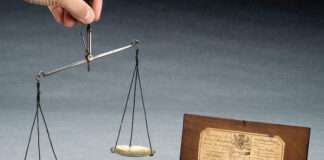
False equivalence and false balance
Journalists can sometimes present an inaccurate or false version of events by trying too hard to 'balance' a story or incorrectly treating elements of a story as being roughly equal.
Causes of climate change
Journalists must avoid providing false equivalence and false balance when covering news stories – particularly climate change.

Editorial independence during elections
Election coverage is one of the most critical responsibilities of the media. It shapes public discourse, informs voters, and plays a vital role in safeguarding democracy.

Creating a fact-checking system
It’s the job of the journalist to try to find and present the truth, but fact-checking isn't easy. It requires a methodological approach to verification.

Setting online news priorities
Modern news sites act as converged content factories, delivering information across all user devices through a streamlined, multi-platform digital newsroom.

Handling story leaks and tip-offs
A critical factor for journalists when handling and disseminating leaked material is the need to take account of the motives of the leaker.

Editing radio news bulletins
Radio bulletins offer concise updates on the latest news. They deliver key stories tailored to your listeners' interests in just a few minutes.

Forms of information disorder
With the spread of fake news, journalists need to recognise and understand the different categories, types, elements, and phases of information disorder.

Covering climate change
Reporting on climate change presents journalists with major hurdles, as it's a topical, controversial subject rooted in complex scientific research.

Fake news and trust chains
"Fake news" encompasses two distinct concepts: fabricated stories masquerading as truth and the dismissal of legitimate news as false.