Advanced journalism

Handling breaking news
Journalists need to have a system in place for covering a breaking news story in order to know who does what and when.
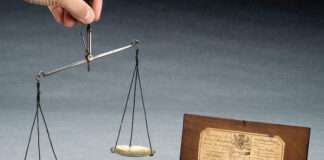
False equivalence and false balance
Journalists can sometimes present an inaccurate or false version of events by trying too hard to 'balance' a story or incorrectly treating elements of a story as being roughly equal.

Tips for motivating journalists
Daily news meetings should be inclusive and agenda-setting. Editors must foster a culture of original ideas and risk-taking to keep staff motivated and alert.

Presenting news content online
A journalist managing a news website is constantly involved in updating, refreshing and repositioning content in time with the evolving news flow.

Avoiding manipulation
One of the roles of the journalist is to scrutinise the decisions made by politicians and report the implications to the public.

Prompting AI for journalism
When using generative AI in journalism, it's essential to create the right prompts. The quality of the prompts will define the quality of the response.
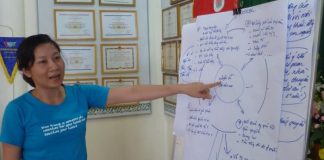
Systems thinking for journalists
Systems thinking empowers journalists to provide deeper more meaningful news coverage by moving beyond surface-level reporting to uncover underlying related facts.

Examining rumour to find facts
The role of a journalist is to publish facts. To do that they often have to examine rumour and gossip as part of the newsgathering process.

Data journalism – resources and tools
We have compiled a list of some of the leading resources and tools that are available for those starting out in data journalism.

Hey AI, what are the top stories of the day?
Have you ever chaired a news meeting surrounded by blank faces with no story ideas? Well, with AI that experience could be a thing of the past.

Detecting AI-generated images
How can journalists identifying fake photographs with so many dramatic images being shared at speed on social media.

The essential role of journalism
Journalism isn’t just reporting, it’s witnessing history, challenging power, amplifying unheard voices, and making sense of a chaotic world.
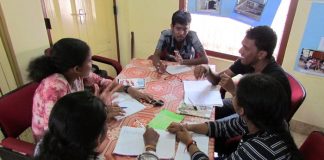
Running an effective news meeting
Here we offer 50 suggestions for helping editors run stimulating news meetings that guarantee a steady stream of original stories.

Information disorder – mapping the landscape
Information disorder is everywhere according to journalist Claire Wardle. Here she sets out the categories that reporters need to be aware of and research.

Journalism, trauma and stress
Journalists often witness traumatic events that impact their reporting. We explore the support available for managing work-related stress and trauma.

Planning effective election coverage
Planning is essential for journalists to produce effective election coverage.

Brand values in news
All news organisations have values. They are the biggest part of the organisation’s brand. Journalists need to uphold these brand values at all times.

Health reporting for beginners
Most journalists are generalists, who can cover any kind of story. But there is also a place for specialists, providing expertise on particular subjects.

Spotting errors in your own writing
Most journalists need a second pair of eyes to check through their copy in order to spot any factual, grammatical or spelling mistakes.

Journalists and politicians
Journalism is often referred to as “the fourth estate”, and is seen as being crucial to the functioning of a healthy and fair society.

Editing radio news bulletins
Radio bulletins offer concise updates on the latest news. They deliver key stories tailored to your listeners' interests in just a few minutes.

Disinformation and misinformation
Journalists attempting to deal with 'fake news' need to understand the difference between disinformation and misinformation.

Tool: Story Weighting System
Different news stories have a different value for your audience and for your business. Giving news items a 'weighting' can lead to impact and efficiencies.