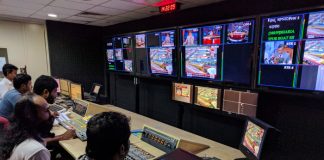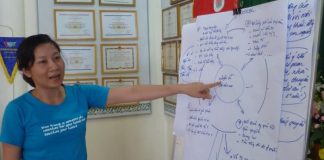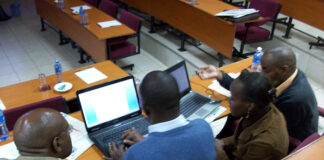
In association with Fojo Media Institute, Linnaeus University, Sweden

Advanced journalism

Image of journalist taking notes by Marco Urban released via Creative Commons BY-NC-ND 2.0

Self-censorship in journalism

To combat self-censorship - a major hurdle for robust impartial journalism - journalists must first recognise why it happens and understand its root causes.
Image of a network interface card created with Gemini Imagen 3 AI by Media Helping Media

Data journalism glossary

The following words and terms are commonly used in data journalism. Data journalists might want to familiarise themselves with them.
Image courtesy of Randy Colas on Unsplash

Forms of information disorder

With the spread of fake news, journalists need to recognise and understand the different categories, types, elements, and phases of information disorder.
Photo by Elijah O'Donnell on Unsplash

Fake news and trust chains

"Fake news" encompasses two distinct concepts: fabricated stories masquerading as truth and the dismissal of legitimate news as false.
Image by Anthony Karanja released via Creative Commons CC BY 2.0

Editorial independence during elections

Election coverage is one of the most critical responsibilities of the media. It shapes public discourse, informs voters, and plays a vital role in safeguarding democracy.
Graphic for a Media Helping Media Training Tool

Tool: Story Weighting System

Different news stories have a different value for your audience and for your business. Giving news items a 'weighting' can lead to impact and efficiencies.
Image illustrating climate change created with Gemini Imagen 3 AI by Media Helping Media

Covering climate change

Reporting on climate change presents journalists with major hurdles, as it's a topical, controversial subject rooted in complex scientific research.
Image of a storm in a teacup - created using Imagen 3 by David Brewer of MHM

The use of idioms in journalism

Journalists producing serious news coverage must always write in a way that is clear, accurate, free from jargon.
Graphic by @urbanmuralhunter, image by Terence Faircloth, released via Creative Commons

Disinformation and misinformation

Journalists attempting to deal with 'fake news' need to understand the difference between disinformation and misinformation.
Image by Dave Null released via Creative Commons CC BY-NC 2.0

A journalist must not have an agenda

Our role as journalists is to unearth information, prepare it and then display it for the benefit of the audience. We are not there to fabricate, manipulate or force.
Slide by David Brewer released via Creative Commons BY-NC-SA 4.0.

Planning effective election coverage

Planning is essential for journalists to produce effective election coverage.
Image of an investigative journalist - created using Imagen 3 by David Brewer of MHM

The essential role of journalism

Journalism isn’t just reporting, it’s witnessing history, challenging power, amplifying unheard voices, and making sense of a chaotic world.

Hosted by the Fojo Media Institute

Fojo logoMedia Helping Media is hosted by the Fojo Media Institute at Linnaeus University.
Follow Media Helping Media on Facebook

MHM on FacebookCheck our Facebook page for regular updates from Media Helping Media.

Content released under Creative Commons

Creative Commons logoThe content on Media Helping Media (MHM) is released via Creative Commons BY NC SA 4.0.