Discover how to create concise, compelling TV and radio packages that capture audience attention and deliver key information effectively.
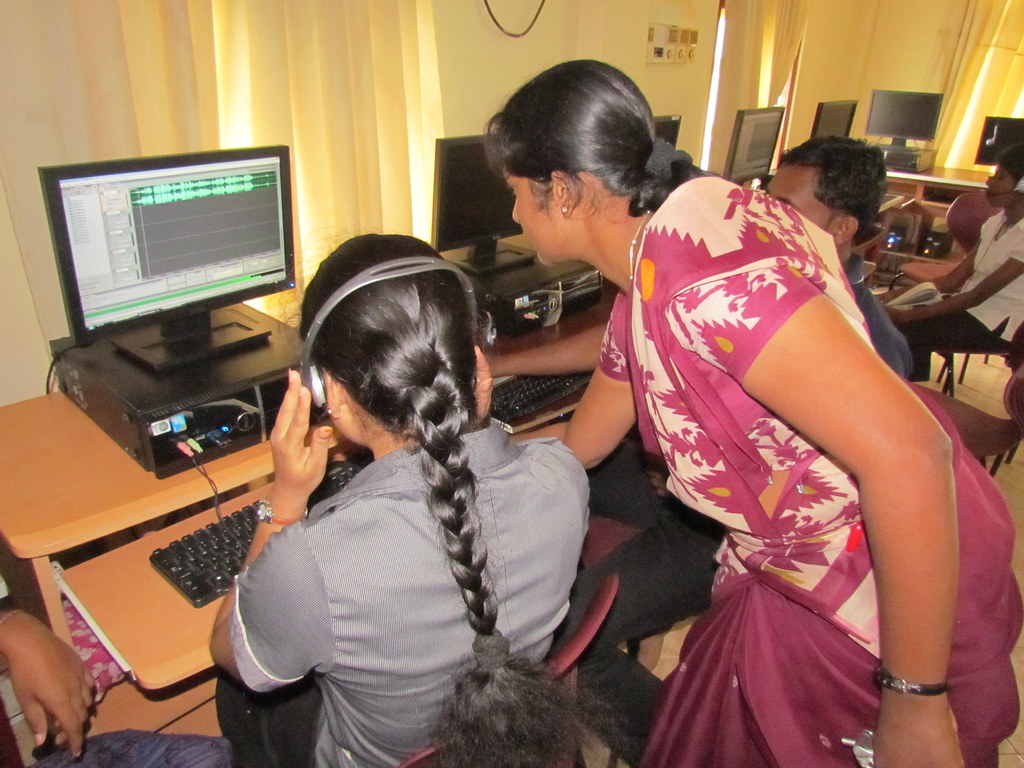
This training module was written for journalism students in Jaffna, Sri Lanka. They were studying broadcast journalism, and in particular creating news features for radio. Many of those attending the course had no previous journalism experience or training.
TV and radio packages
Structure, timing, and letting the interview breathe are all essential elements for ensuring a general TV or radio news package works.
These are the packages where you introduce the audience to an issue and explore multiple elements of the story through interviewing different people.
It’s also important not to cram too much into an item, perhaps just three points.
And try to avoid noddies (shots where you, the interviewer, nod and which are edited in later) and walking shots for TV, they are overused and boring.
Try to think of original shots and sounds that will capture the attention of the audience.
- Clarity: Before you start, have a clear idea of how long your finished item is likely to be and roughly how much footage of your interviewees you are likely to use.
- Format: Map out a structure for the piece and try to work out a likely order for the interview clips and which points they will address.
- Main points: Try to limit yourself to three main points for one item.
- Interviewees: Make sure each of these three points is addressed by a different interviewee.
- Review: Listen or watch the interview in full from start to finish at least once in order to ensure you haven’t missed anything. Take notes of the time on the recording of each potential interview clip, the words that begin the clip and the words that end it.
- Coherence: When you have repeated the process for all the interviews in your piece, return to the structure you have mapped out and see if it is still coherent or if the order of interviewees needs to change.
- Strength: Try to put the strongest interview near the start of the piece.
- Selection: When you are selecting interview clips, choose ones which give opinion over ones which relay only information; information which is not controversial can easily be summarised by you in your linking commentary.
- Pace: Try to leave a pause at the start and end of each clip. Life isn’t breathless; neither should a radio or television package be.
- Clichés: In television avoid using noddies and walking shots to illustrate your material. They are the mind-numbingly boring to look at and do not make best use of the medium.
- Editing: Avoid cutting excessively from the answer (such as taking one part of three seconds from the start of an answer, three seconds from the middle, and five from the end). This sounds and looks unnatural, misrepresents the interviewee, and is excessively difficult to process for television interviews.
- Context: Never take an answer from one question and use it in response to another. This is gross misrepresentation.
- Commentary: When you are writing commentary to link the clips together, try to avoid using the same words at the end of your text as the interviewee says in the beginning of the clip ie. : John Smith said he was delighted.. [John Smith] “I am delighted …”
- Summaries: In TV and radio journalism, your package may often be mentioned in a news bulletin in the form of a clip before its broadcast slot. When writing the introduction for that clip, avoid summarising everything that is going to feature in the clip.
- Positioning: In television reports, try to stick to the convention of alternate interviewees being on opposite sides of the screen. (First interviewee looking left to right, second right to left, third left to right etc.)
- Voices: Try to avoid running two clips back to back without a commentary in between. Where this is unavoidable, for example in the case of vox pops, try to alternate between male and female voices. The reason for this is to avoid confusion.
- Titles: Always make sure that you have the correct title for your interviewee and the correct spelling of their name. This is particularly important for TV captions. If they have a particularly long job title, agree a shortened version before you return from the interview.
- Ending: Try to avoid ending a report with a clip of one of the interviewees. In TV this looks untidy. In radio, it complicates life for the studio presenter. It also gives one side or another of an argument the last word.
- Answers: If you are editing an interview as a stand-alone item, try to put as much of the non-controversial information in the intro or lead-in to the item, and always make sure the intro ends with a question and the piece begins with an answer to that question.
- Options: For stand-alone interviews, always give an option of an early ending, with a shorter duration and the right out-words. This will help the production team in case more urgent news breaks or they need to cut back your item.